Affiliate Marketing: The One Setup Most Beginners Skip
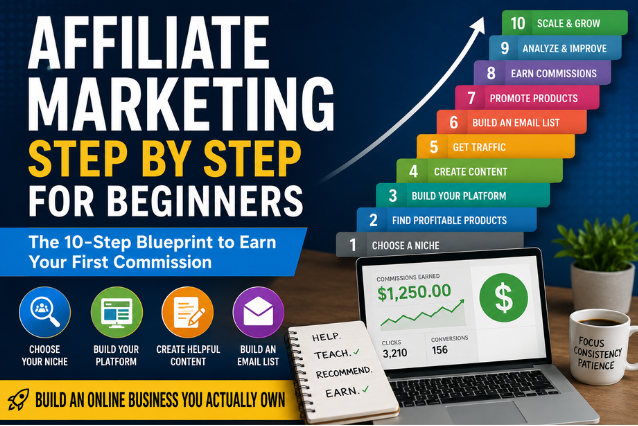
If you’ve spent any time researching affiliate marketing, you’ve probably seen screenshots of people earning commissions while wondering…
“How do they actually do it?”
From the outside, it can seem like successful affiliate marketers know some secret that everyone else missed.
The truth is much simpler.
Most beginners don’t fail because affiliate marketing is too difficult. They fail because they skip the one thing that matters most—they never build a solid foundation.
Instead, they jump from opportunity to opportunity, watch dozens of YouTube videos, join multiple affiliate programs, and hope that somehow everything will eventually come together.
Unfortunately, that’s not how successful online businesses are built.
The people who consistently earn affiliate commissions aren’t guessing. They’re following a repeatable system. They understand the order of the steps, focus on helping people solve real problems, and keep showing up long after most beginners have quit.
If you’re looking for affiliate marketing step by step for beginners, you’re already asking the right question.
In this guide, I’ll walk you through the process I wish someone had explained to me when I first started. You’ll learn how affiliate marketing actually works, how to choose products worth promoting, where to get traffic, and how to build something that can continue producing commissions for years—not just weeks.
Whether your goal is to earn a little extra income on the side or build a full-time online business, everything starts with getting the foundation right.
Let’s begin.
How Affiliate Marketing Step by Step for Beginners Actually Works
Affiliate marketing is one of the simplest online business models to understand, yet it’s often made to sound far more complicated than it really is.
At its core, affiliate marketing is simply recommending products or services that solve a problem. When someone purchases through your unique referral link, the company rewards you with a commission.
You don’t have to create a product.
You don’t have to manage inventory.
You don’t have to ship orders or provide customer support.
Your primary responsibility is connecting the right people with the right solutions.
Think of yourself as a trusted guide.
When someone searches for answers online, they’re looking for help—not another sales pitch. If your content genuinely solves a problem and introduces a product that makes their life easier, everyone benefits.
The customer gets a solution.
The company gains a new customer.
You earn a commission for making the connection.
Commission rates vary depending on the program. Physical products often pay lower percentages, while digital products, software subscriptions, and online training programs frequently offer much higher commissions and, in some cases, recurring monthly income.
That’s why choosing what you promote matters just as much as learning how to promote it.
Finding the Right Product to Promote
One of the biggest mistakes beginners make is chasing the highest commission instead of solving the right problem.
A large commission means very little if the product isn’t useful to the people you’re trying to help.
Instead, start with something much simpler.
Ask yourself:
What problems do I already understand?
Maybe you’ve learned how to budget your finances.
Maybe you’ve successfully lost weight.
Perhaps you’ve built a website, started a YouTube channel, or learned a skill that others are trying to master.
Your personal experience has value because you’ve already walked a path someone else is just beginning.
Once you’ve identified a topic you understand, start researching affiliate programs within that niche.
Many companies have affiliate programs listed on their websites. Others work through affiliate networks that make it easy to apply and begin promoting products.
As you compare opportunities, pay attention to more than just commission percentages.
Consider questions like:
- Does this product genuinely help people?
- Would I recommend it to a friend or family member?
- Does the company have a good reputation?
- Is there ongoing support or training available?
- Could this product still be valuable to someone a year from now?
The strongest affiliate businesses are built on trust.
Every recommendation you make either strengthens that trust—or weakens it.
Protect it carefully.
Rob’s Perspective
When I first started exploring affiliate marketing, I made the same mistake many beginners make.
I believed success was hidden inside the “perfect opportunity.”
Every few weeks I’d discover another program claiming to be the fastest path to financial freedom. I thought if I could just find the right company, everything else would fall into place.
Looking back, I realize I was asking the wrong question.
The opportunity wasn’t what I was missing.
The skills were.
Everything began to change once I focused on learning how to create helpful content, attract visitors, build relationships, and consistently provide value.
Programs will change.
Companies will come and go.
Marketing trends will evolve.
But when you develop the skills to attract an audience and solve real problems, you’ll always have something that no algorithm or company can take away.
That’s why I encourage every beginner to spend less time chasing opportunities and more time mastering the fundamentals.
Building Your Platform Without Spending Thousands
One of the biggest myths about affiliate marketing is that you need expensive software, complicated websites, or thousands of dollars to get started.
You don’t.
What you do need is a place where people can consistently discover your content and learn from you.
For many beginners, that starts with a simple blog.
A blog allows you to publish helpful articles, answer questions people are already searching for, and recommend products naturally within your content. Unlike social media posts that disappear from a news feed within hours, a well-written blog article can continue attracting visitors from search engines for months—or even years.
Social media platforms can also play an important role in your strategy. YouTube, Facebook, Pinterest, Instagram, Threads, and TikTok all provide opportunities to reach new audiences without paying for advertising.
The key is resisting the temptation to be everywhere at once.
Choose one primary platform.
Learn it well.
Publish consistently.
As your confidence and experience grow, you can expand to additional traffic sources.
There’s one asset, however, that’s even more valuable than your blog or your social media accounts…
Your email list.
Unlike social media platforms, your email list belongs to you. It’s a direct line of communication with people who have already shown an interest in what you teach.
Algorithms change.
Platforms rise and fall.
But an engaged email list remains one of the most valuable assets an online business can own.
Start building yours from day one.
Don’t wait until you’re “successful.”
Successful marketers build their audience first—and the income follows.
Creating Content That Builds Trust and Drives Affiliate Sales
If affiliate marketing is the engine, then content is the fuel.
Without helpful content, very few people will ever discover your affiliate links. And even if they do, they probably won’t trust your recommendations enough to click or buy.
That’s why successful affiliate marketers don’t focus on selling.
They focus on helping.
Every blog post, video, email, or social media post should answer a question, solve a problem, or make someone’s life a little easier. When you consistently provide value first, recommending products becomes a natural extension of the conversation—not an interruption.
One of the easiest ways to create valuable content is by writing honest product reviews. Instead of simply listing features, explain who the product is for, where it shines, and where it falls short. Readers appreciate balanced opinions because they feel genuine.
Tutorials are another powerful content format.
People search Google every day looking for step-by-step instructions. When you show someone exactly how to accomplish a task, you naturally introduce the tools that helped you along the way. That’s where affiliate recommendations make sense because they’re part of the solution.
Comparison articles also perform exceptionally well.
Someone searching for “Product A vs. Product B” is usually much closer to making a purchase than someone simply researching a topic. By comparing options honestly and explaining which one fits different needs, you position yourself as a trusted advisor instead of another salesperson.
The key is simple:
Teach first.
Recommend second.
Your commissions become a byproduct of helping people make better decisions.
Getting Your First Visitors Without Paying for Ads
You can have the best content on the internet, but if nobody sees it, it won’t generate commissions.
Fortunately, you don’t need a huge advertising budget to start attracting visitors.
One of the most effective long-term traffic strategies is Search Engine Optimization (SEO).
SEO simply means creating content around topics people are already searching for.
Instead of guessing what to write, you answer questions that already have demand.
For example, someone searching for “affiliate marketing step by step for beginners” is actively looking for guidance. By publishing a comprehensive article that answers that exact question, you give Google a reason to send those visitors to your website.
The beauty of SEO is that one well-written article can continue attracting traffic for years.
That’s very different from paid advertising, where traffic stops the moment you stop spending money.
Pinterest is another underrated traffic source, especially for blogs.
Unlike traditional social media platforms, Pinterest functions more like a visual search engine. People visit Pinterest specifically to discover ideas, learn new skills, and solve problems. A well-designed pin connected to a valuable article can continue driving visitors long after it’s published.
YouTube is equally powerful.
You don’t need expensive equipment or professional editing to get started. Many successful creators simply share tutorials, answer common questions, or record their computer screen while explaining a process.
The goal isn’t perfection.
It’s consistency.
Finally, don’t overlook the power of participating in communities.
Comment thoughtfully on YouTube videos.
Answer questions in online groups.
Write guest articles for established websites.
When people consistently see you providing helpful advice, they’ll naturally become curious about what else you have to offer.
Traffic isn’t something you chase.
It’s something you earn by becoming genuinely useful.
Rob’s Perspective
One of the biggest lessons I’ve learned is that traffic follows value.
Early on, I spent too much time searching for shortcuts.
I wanted the secret traffic source.
The magic software.
The perfect marketing strategy.
What I eventually discovered was that every successful marketer I admired was doing something surprisingly simple.
They kept showing up.
They published another article.
Recorded another video.
Sent another email.
Answered another question.
None of those individual pieces of content changed everything overnight.
But together, they built trust.
And trust is what generates commissions.
If you’re just getting started, don’t worry about creating hundreds of pieces of content.
Focus on creating one genuinely helpful piece this week.
Then do it again next week.
Momentum is built one publication at a time.
Learning From People Who’ve Already Done It
One of the fastest ways to shorten your learning curve is to learn from people who have already built the kind of business you’re trying to create.
Could you figure everything out on your own?
Probably.
But you’ll almost certainly spend more time making avoidable mistakes.
That’s one reason I believe beginners benefit from structured training and supportive communities.
Reading blog posts gives you information.
Watching experienced marketers explain why something works—and seeing them demonstrate it—gives you understanding.
If you’re serious about building an affiliate marketing business, I recommend finding a training program that focuses on practical skills rather than hype.
One of the resources I personally recommend is OLSP Academy.
Their free training introduces the fundamentals of affiliate marketing, content creation, traffic generation, and online business building in a beginner-friendly format. More importantly, it gives you access to a community where you can ask questions, learn from other marketers, and continue improving as you grow.
Whether you choose OLSP or another quality training program, don’t try to learn everything through trial and error alone.
The right mentor won’t do the work for you.
But they can help you avoid mistakes that might otherwise cost you months of frustration.
Setting Up Your Affiliate Links the Right Way
Once you’ve joined an affiliate program, you’ll receive a unique referral link that allows the company to track any sales you generate.
It might seem like a small detail, but how you use those links matters.
First, always be transparent.
If you’re recommending a product through an affiliate link, let your readers know. A simple disclosure explaining that you may earn a commission at no additional cost to them builds trust and helps you comply with affiliate marketing guidelines.
Next, make your links easy to manage.
As your website grows, you’ll eventually have dozens—or even hundreds—of affiliate links scattered throughout your content.
Using a link management tool keeps everything organized and makes it much easier to update links if an affiliate program changes.
Finally, pay attention to your numbers.
Most affiliate dashboards show clicks, conversions, and commissions.
Review those reports regularly.
If one article consistently generates sales, ask yourself why.
Can you create similar content?
Can you improve it?
Can you update it?
Affiliate marketing isn’t about guessing.
It’s about making informed decisions based on real data.
The more you understand what’s working, the easier it becomes to repeat your success.
Scaling From Your First Commission to Consistent Income
Your first commission is exciting.
Not because of the amount of money.
But because it proves something much bigger.
It proves that a stranger found your content…
Trusted your recommendation…
Clicked your link…
And made a purchase.
That single commission validates the entire process.
From there, your goal isn’t to start over.
It’s to repeat what worked.
If one article generated traffic, create another covering a related topic.
If one email sequence converted well, improve it and build another.
If one affiliate product consistently helps your audience, look for complementary products that solve the next problem they’re likely to face.
This is where affiliate marketing begins to compound.
Each article becomes another doorway into your business.
Each email strengthens your relationship with subscribers.
Each recommendation builds credibility.
And over time, those individual pieces begin working together like a system.
That’s how a handful of commissions eventually grows into reliable monthly income.
Common Mistakes That Hold Beginners Back
One of the biggest reasons people fail with affiliate marketing isn’t because the business model doesn’t work.
It’s because they make a handful of avoidable mistakes that quietly slow their progress.
The good news?
Once you’re aware of these mistakes, they’re surprisingly easy to avoid.
Trying to Promote Everything
It’s tempting to sign up for dozens of affiliate programs and fill your website with links.
More products should mean more commissions…
Right?
Not usually.
When readers see recommendations for everything, they begin trusting nothing.
Instead, focus on a small number of products that genuinely solve your audience’s biggest problems. Become known for quality recommendations rather than endless promotions.
Chasing High Commissions Instead of Helping People
A product paying a $500 commission might look attractive, but if it isn’t the right fit for your audience, those large commissions won’t matter.
Trust is your most valuable asset.
Protect it.
Every recommendation should answer one question:
“Will this genuinely help the person reading this?”
If the answer is yes, promote it confidently.
If not, keep looking.
Expecting Results Too Quickly
Affiliate marketing isn’t a lottery ticket.
It’s a business.
Many beginners publish three or four articles, wait two weeks, and decide it doesn’t work.
Meanwhile, experienced marketers understand that content compounds.
An article published today may continue generating traffic and commissions years from now.
Patience isn’t optional.
It’s part of the process.
Ignoring Email Marketing
Social media is fantastic for reaching new people.
But social platforms belong to someone else.
Algorithms change.
Accounts disappear.
Rules evolve.
Your email list is different.
It’s an audience you’ve earned.
One helpful email each week can generate more long-term business than dozens of social media posts.
That’s why I often say…
Followers are borrowed. Your email list is owned.
The Essential Tools Every Beginner Should Consider
One of the biggest misconceptions about affiliate marketing is that you need expensive software before you can succeed.
You don’t.
Start simple.
As your business grows, your tools can grow with it.
Here are a few categories worth considering:
Keyword Research
Keyword research helps you understand what your audience is already searching for.
Free tools are perfectly adequate when you’re getting started.
As your website grows, premium SEO tools can help you uncover additional opportunities and monitor your rankings.
Email Marketing
Your email service provider becomes the communication hub of your business.
It allows you to welcome new subscribers, share valuable content, and recommend products over time through automated email sequences.
One subscriber today could become a customer months—or even years—from now.
Analytics
Successful marketers don’t guess.
They measure.
Analytics show which articles attract visitors, which traffic sources perform best, and which content generates the most affiliate sales.
When you know what’s working, you can create more of it.
Link Management
As your affiliate business grows, managing dozens of long affiliate URLs becomes difficult.
A link management plugin keeps everything organized and makes updating affiliate links much easier.
It’s a small investment that saves a tremendous amount of time later.
Why Following a Proven System Makes Everything Easier
There are thousands of free videos about affiliate marketing.
Thousands of blog posts.
Thousands of opinions.
The problem isn’t finding information.
The problem is knowing which advice to follow.
That’s why I believe beginners benefit from learning from a proven system instead of trying to piece everything together themselves.
A structured training program gives you something far more valuable than information.
It gives you direction.
Instead of wondering what to do next, you simply focus on the next step.
That momentum builds confidence.
Confidence leads to action.
Action creates results.
Ready to Take the Next Step?
If you’ve made it this far, you’re already ahead of many beginners.
You’ve learned how affiliate marketing works.
You understand why building trust matters.
And you know that consistent action—not shortcuts—is what creates long-term success.
Reading articles like this is an excellent way to build your knowledge.
But eventually there comes a point where the best way to learn is by seeing experienced marketers put these ideas into practice.
That’s why I recommend checking out the free training available through OLSP Academy.
Their beginner-friendly training covers affiliate marketing fundamentals, traffic generation, lead generation, and business-building strategies in a way that’s easy to follow.
Even better, you’ll become part of a supportive community where you can ask questions, learn from experienced marketers, and stay motivated as you build your own business.
👉 Access the Free OLSP Training Here
(Affiliate Disclosure: If you decide to join through my affiliate link, I may earn a commission at no additional cost to you. I only recommend products and resources that I believe can genuinely help my readers.)
Tracking Your Progress
Affiliate marketing isn’t about publishing content and hoping for the best.
It’s about improving over time.
Set aside a few minutes each week to review your progress.
Ask yourself:
- Which articles attracted the most visitors?
- Which affiliate links received the most clicks?
- Which products converted the best?
- Which traffic sources are growing?
- What questions are readers asking?
Those answers become your roadmap.
Instead of wondering what to create next, your audience will tell you.
The marketers who improve the fastest aren’t necessarily the smartest.
They’re the ones who pay attention to the data and continue making small improvements every week.
Building Reliable Monthly Income
One commission feels exciting.
Ten commissions build confidence.
One hundred commissions create options.
That’s the power of consistency.
Every helpful article becomes another opportunity for someone to discover your business.
Every email strengthens your relationship with your audience.
Every recommendation builds trust.
Over time, those individual pieces become an online business that continues working long after you’ve published the content.
That’s why affiliate marketing isn’t about chasing quick wins.
It’s about creating digital assets that continue generating value month after month.
Final Thoughts
Affiliate marketing isn’t about finding one magical product.
It isn’t about joining the newest opportunity.
And it certainly isn’t about flooding the internet with affiliate links.
It’s about becoming someone people trust.
Every successful affiliate marketer started exactly where you are today.
No audience.
No commissions.
No guarantees.
The difference wasn’t luck.
It wasn’t talent.
They simply committed to learning valuable skills, helping people solve real problems, and showing up consistently.
Do that long enough, and your first commission becomes something much bigger.
It becomes proof that you’ve built a business capable of growing for years to come.
As you continue your journey, remember the philosophy that guides everything I teach:
Build an Online Business You Actually Own.
Social media platforms can change overnight.
Algorithms can disappear.
Companies can come and go.
But when you own your website, build your email list, and earn your audience’s trust, you’re creating something no platform can take away.
Start today.
Stay consistent.
Keep learning.
Your future self will thank you.
— Rob Tinsley
Continue Your Affiliate Marketing Journey
If this guide helped you, these articles are excellent next steps:
- How to Start Affiliate Marketing with No Experience
- How to Make Your First Affiliate Commission
- Best Free Traffic Sources for Affiliate Marketing Beginners
- Affiliate Marketing Mistakes Beginners Should Avoid
- Email Marketing for Affiliate Beginners
- How to Build an Email List Before You Have Traffic
- Why Every Affiliate Marketer Needs a Blog
- How to Choose the Right Affiliate Programs
About the Author
Rob Tinsley is the founder of SuccessByRob, where he helps aspiring entrepreneurs build sustainable online businesses through affiliate marketing, blogging, AI tools, email marketing, and content creation. Drawing from years of real-world experience building online income, Rob’s mission is simple: help beginners stop chasing shortcuts and start building digital assets they truly own. His philosophy is at the heart of every article he writes:
“Build an Online Business You Actually Own.”