The 7 Hidden Signs Hormones Are Causing Weight Gain (And Why Diet & Exercise Aren’t Working)
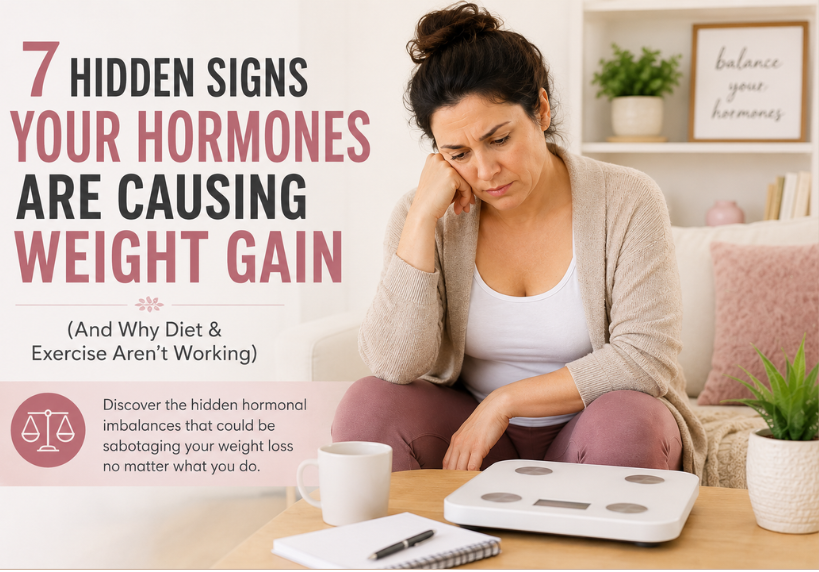
Signs hormones are causing weight gain are often missed…
Leaving many women frustrated when diet and exercise no longer seem to work.
You clean up your diet.
You start moving more.
You cut calories, drink more water, maybe even push yourself harder than ever before.
And still… the weight doesn’t move.
Or worse—it keeps climbing.
Few things feel more defeating than putting in real effort and seeing little to no return. It can leave you questioning your discipline, your habits, even your body itself.
But here’s what many people never hear:
Sometimes, weight gain has less to do with laziness or lack of willpower—and far more to do with what’s happening internally.
Your hormones may be quietly shaping your metabolism, cravings, fat storage, and energy levels in ways most traditional weight loss advice completely ignores.
So if your body feels like it’s resisting every healthy choice you make, there may be a deeper reason.
Why Hormones Can Make Weight Loss Feel Impossible
Hormones are more than just chemical messengers.
They influence nearly every system tied to body composition, including:
- Metabolic speed
- Hunger cues
- Blood sugar regulation
- Stress response
- Sleep quality
- Fat storage patterns
- Muscle maintenance
- Reproductive health
When hormones fall out of balance, the body can begin storing fat more efficiently, increasing hunger, slowing calorie burn, and making weight loss dramatically harder—even if your habits are solid.
The primary hormonal players behind stubborn weight gain include:
- Cortisol: Stress hormone linked to abdominal fat
- Insulin: Blood sugar regulator; resistance can increase fat storage
- Thyroid hormones: Major controllers of metabolism
- Estrogen: Imbalances may shift fat distribution
- Progesterone: Can influence fluid retention and energy
- Leptin: Helps regulate fullness
- Ghrelin: Drives hunger signals
In other words, if these systems are off, your body may be fighting against you behind the scenes.
1. Stubborn Belly Fat That Refuses to Budge
One of the most common signs hormones are causing weight gain is persistent belly fat.
Not all weight gain behaves the same way.
If most of your excess weight seems concentrated around your midsection—and no amount of clean eating or exercise seems to change it—that can be a major hormonal clue.
Why this happens:
Chronic stress elevates cortisol, which encourages the body to store visceral fat around the abdomen. Insulin resistance can compound this, making belly fat particularly difficult to lose.
Common signs:
- Expanding waistline
- Persistent lower belly fat
- Stress-related cravings
- Increased fat storage despite healthy routines
For many people, this isn’t just “normal aging.” It may be a metabolic stress response.
2. You’re Exhausted All the Time
Fatigue is another major sign hormones are causing weight gain.
This isn’t ordinary tiredness.
Hormonal fatigue often feels heavier—like your energy has been drained at the source.
You may wake up tired.
Crash in the afternoon.
Struggle through workouts that once felt manageable.
Potential hormonal causes:
- Thyroid dysfunction
- Adrenal stress
- Blood sugar instability
- Poor cortisol rhythm
When metabolism slows, calorie burn often follows. That combination can create the frustrating pattern of weight gain plus chronic exhaustion.
3. Your Cravings Feel Almost Impossible to Control
If sugar, carbs, or late-night snacking feel less like indulgence and more like biological urgency, hormones may be involved.
What could be happening:
Blood sugar spikes, insulin crashes, leptin resistance, or elevated cortisol can all intensify hunger signals.
This often looks like:
- Strong sugar cravings
- Emotional eating
- Constant hunger
- Nighttime snacking
- Difficulty feeling satisfied
This isn’t simply about self-control. Your internal chemistry may be amplifying appetite in ways that feel overpowering.
4. You’re Doing Everything Right—But the Scale Won’t Move
Perhaps one of the most emotionally draining signs is the unexplained plateau.
You track food.
Exercise consistently.
Make healthier choices.
Yet your body barely responds.
Hormonal conditions often associated with resistant weight loss:
- Hypothyroidism
- PCOS
- Perimenopause
- Elevated cortisol
- Insulin resistance
When hormones are disrupted, your body can enter a protective state, conserving energy and resisting fat loss more aggressively than expected.
5. Your Mood Feels Unstable, and Your Weight Is Rising
Hormonal imbalance doesn’t only affect physical weight—it often impacts emotional weight too.
You may notice:
- Anxiety
- Irritability
- Mood swings
- Depression
- Emotional eating patterns
Estrogen, progesterone, cortisol, and thyroid hormones all influence neurotransmitters and nervous system stability.
So if your emotions feel more volatile while your weight increases, the connection may be physiological—not personal weakness.
6. Your Sleep Has Become Broken or Unpredictable
Sleep is one of the body’s most powerful hormonal regulators.
When sleep quality declines, hormones tied to hunger and fat storage often shift quickly.
Poor sleep can:
- Increase ghrelin (hunger hormone)
- Reduce leptin (satiety hormone)
- Elevate cortisol
- Worsen insulin sensitivity
Warning signs:
- Frequent waking
- Trouble falling asleep
- Night sweats
- Restlessness
- Early morning waking
Even subtle sleep disruption can create a biological environment that favors weight gain.
7. Your Cycle, Libido, or Reproductive Health Has Changed
For women especially, reproductive shifts often reveal deeper hormonal changes.
Potential indicators:
- Irregular cycles
- Heavy periods
- Worsening PMS
- Low libido
- PCOS symptoms
- Perimenopause changes
These symptoms frequently overlap with metabolic disruption, making them critical signals that shouldn’t be dismissed.
The Most Common Hormonal Imbalances Behind Weight Gain
Cortisol Imbalance
Long-term stress can keep the body in fat-storage mode.
Effects:
- Belly fat
- Cravings
- Inflammation
- Fatigue
Insulin Resistance
When cells become less responsive to insulin, fat storage becomes easier and weight loss becomes harder.
Symptoms:
- Sugar cravings
- Energy crashes
- Abdominal weight gain
- Increased hunger
Thyroid Dysfunction
A sluggish thyroid can significantly reduce metabolic efficiency.
Symptoms:
- Fatigue
- Hair thinning
- Weight gain
- Cold sensitivity
- Brain fog
Estrogen Dominance
Particularly common during perimenopause, PCOS, or chronic stress.
Effects:
- Water retention
- Fat gain
- Mood shifts
- Hormonal bloating
How to Find Out If Hormones Are the Real Problem
If several of these symptoms sound familiar, testing may provide clarity.
Useful lab markers include:
- TSH, Free T3, Free T4
- Fasting insulin
- Cortisol
- Estrogen
- Progesterone
- Testosterone
- HbA1c
Helpful self-tracking tools:
- Symptom journals
- Sleep tracking
- Menstrual tracking
- Body measurements
A more complete hormonal picture often reveals what calorie counting alone cannot.
How to Support Hormonal Balance Naturally
Nutrition That Stabilizes Hormones
Prioritize:
- Protein
- Fiber
- Healthy fats
- Blood sugar balance
- Whole foods
Reduce:
- Refined sugars
- Ultra-processed foods
- Excessive alcohol
- Severe calorie restriction
For women looking to support metabolism, digestion, and healthy weight management naturally,
This tea-based wellness option may be worth exploring.
Exercise That Works With Your Hormones
For many people, more intensity isn’t always better.
Supportive options:
- Strength training
- Walking
- Pilates
- Yoga
- Moderate cardio
Excessive high-intensity exercise may worsen cortisol-related issues in some cases.
Stress Regulation
Stress management is often hormonal therapy in disguise.
Effective tools:
- Meditation
- Breathwork
- Sleep optimization
- Nervous system support
- Counseling
Professional Support
Depending on your root cause:
- Thyroid treatment
- Hormone therapy
- PCOS management
- Functional medicine
- Nutrition coaching
Questions You May Already Be Asking Yourself
“Can hormones really stop weight loss even if I’m eating well?”
Yes. Hormones can influence metabolism, hunger, and fat storage so significantly that progress may stall despite healthy habits.
“What hormone is most likely causing my weight gain?”
Cortisol, insulin resistance, thyroid dysfunction, and estrogen imbalance are among the most common drivers.
“Will balancing hormones help me lose weight?”
For many people, addressing hormonal dysfunction unlocks progress that previously felt impossible.
“Could I actually be over-exercising?”
Possibly. In some cases, excessive exercise can elevate cortisol and worsen hormonal resistance.
For women seeking additional hormone balance support,
this trusted wellness resource may offer helpful next steps.
Products / Tools / Resources
Hormone Testing & Diagnostics
- Comprehensive thyroid panels
- At-home hormone test kits
- Continuous glucose monitors
- Functional medicine lab services
Nutrition Support
- Blood sugar balancing meal plans
- High-protein nutrition guides
- Anti-inflammatory cookbooks
- Registered dietitian consultations
Supplements Commonly Used for Hormonal Support
- Magnesium
- Omega-3 fatty acids
- Vitamin D
- Adaptogens (with professional guidance)
- Inositol for insulin sensitivity/PCOS support
Lifestyle Tools
- Sleep trackers
- Meditation apps
- Stress management programs
- Strength training apps
Professional Guidance
- Endocrinologists
- Functional medicine practitioners
- Women’s hormone specialists
- Certified nutrition coaches
Recognizing the signs hormones are causing weight gain may help women pursue more effective solutions.