You Got My Attention. Now What? Copywriting That Turns Interest Into Sales
Table of Contents :
You Got My Attention. Now What? Copywriting That Turns Interest Into Sales

You need to write another post. You sit down, stare at the screen, and suddenly have absolutely nothing to say. Yesterday you had enough opinions to fill a newspaper. Today? Nothing.
Affiliate and digital marketers did not invent this problem. Long before laptops, Reels, and email funnels, people selling through print had to persuade someone to stop, read, and respond. Their headlines were the clickbait of the print age. The reader just had to find an envelope instead of a button.
I followed some of those fellows like a disciple. They taught me a great deal about getting attention—including the uncomfortable difference between selling a dream and explaining how to achieve it.
That is where copywriting that turns interest into sales begins: with attention. What happens afterward determines whether you have earned a customer’s trust.
Affiliate disclosure: I am an affiliate for some of the services mentioned here. If you purchase through my affiliate links, I may earn a commission. I am recommending other companies’ products and services, rather than selling my own course.
1. Copywriting That Turns Interest Into Sales Starts With a Hook

Tyler G. Hicks knew how to make you stop reading everything else.
Consider a title like How to Make One Million Dollars in Real Estate in Three Years Starting with No Cash. A fortune. A deadline. And an answer to the objection most readers would raise before opening the book: “I don’t have any money.”
Subtle? About as subtle as a marching band in your living room. But you understood the appeal immediately.
I first encountered the term Other People’s Money—OPM—in one of Hicks’s books. His writing painted pictures of possibility. You already had determination, imagination, and ambition. Apparently, you were just missing the right financial ingredient.
Obstacles became flimsy weeds beneath the boots of optimism. Hicks wielded his pen like a swordsman: a flourish, a flash, and he had your attention.
Here is my complaint, based on the three books I read: I kept waiting for the nuts and bolts. I got dreams, hooks, and encouragement, but never the usable instructions I was looking for.
That distinction matters. A book can succeed at getting purchased and still leave its reader wondering what to do on Monday morning.
2. Copywriting That Turns Interest Into Sales Must Offer More Than Motivation
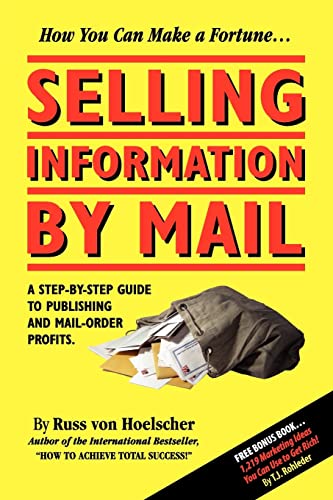
Another name from my mail-order education is Russ von Hoelscher. His work belonged to the world of selling information, publishing, and home-business opportunities—the ancestors of today’s courses, downloads, and digital offers.
The packaging has changed. The underlying question is familiar: what does someone want to know badly enough to pay for help?
The motivational material I collected around that world emphasized helping other people get what they want. There is a useful business principle there: understand the person, offer something relevant, and make it easier for them to move forward.
But motivation and instruction do different jobs. Encouragement may get someone to sit at the desk. They still need to know what to do once they get there.
Good copywriting should connect those two things. Give people a reason to care, then show them what the offer actually provides. As an affiliate, I need to understand that connection before I put my recommendation behind someone else’s product.
3. Copywriting That Turns Interest Into Sales Understands the Real Goal
Before writing the headline, ask what the prospective buyer actually wants.
Picture a young father considering a side business. His practical goal might be simple: “We’re doing okay, but some additional income would help.”
His emotional goal is more vivid: “Imagine Suzy’s face when she walks into Disney World.”
Those are two layers of the same desire. One concerns household money. The other concerns what that money could mean to his family.
Copywriting that turns interest into sales recognizes both. It helps readers picture a benefit while explaining the work, costs, and uncertainty involved in pursuing it. A course can teach a skill; it cannot promise that family’s vacation.
The more clearly you understand the goal, the less you need to decorate the offer with vague promises about “financial freedom.” You can explain whom it might help and how.
4. Copywriting That Turns Interest Into Sales Listens to the Doubts

“Walk a mile in the other person’s moccasins” is sound advice for a marketer. What does your reader see, hear, and say privately to themselves?
They see people online apparently making money. Some are doing what I call Rich Kid LARPing: expensive watches, rented scenery, and an awful lot of pointing. Others appear to have built something real.
They hear income claims. Some sound ridiculous. Others seem just plausible enough to investigate.
Then comes the private conversation: “If this doesn’t work, I’ll look like an idiot. But if other people can learn it, could I?”
That person needs useful answers. What is the product? What experience does it assume? What will it cost beyond the advertised price? Where can they get help?
Copywriting that turns interest into sales makes room for those questions. It gives a skeptical reader something more useful than another instruction to believe in themselves. That’s what led me to become involved in Justin Temple’s High Ticket Lifestyle. Justin impressed me with his sincerity and his genuine interest in being helpful. Please go now to https://badassnetwork.com/go/dino4051/ to see how this simple program can benefit you now. Don’t delay.
5. Copywriting That Turns Interest Into Sales Reframes Concerns Honestly
Some objections come from mistaken assumptions. Others are legitimate limits. Our job is to tell the difference. Someone who cannot afford a program has a budget, not a defective mindset.
Here is how I approach the concerns people bring to affiliate and digital marketing:
| Belief or concern | A more useful way to look at it |
|---|---|
| “I don’t have enough money for this program.” | Some training and tools are free or inexpensive. Compare the full cost of starting and continuing before choosing. Passing on an unaffordable offer is sensible. |
| “I need advanced computer skills.” | Basic browsing, email, and social media skills can give you a starting point. Expect to learn additional software; clear instruction and accessible support matter. |
| “I hate selling.” | You can promote through useful content and recommendations without cold pitching or pressuring people. You are still helping someone make a buying decision, so understanding the product matters. |
| “What if I fail?” | A venture may lose money or fail to meet expectations. Decide what time and money you can risk, measure progress, and keep the skills you develop—even if you leave the program. |
| “I don’t have time.” | Look at the actual weekly tasks, including setup and learning. A manageable schedule beats a promise of effortless income. |
| “There is too much competition.” | Competition exists. Your experience, examples, and choice of audience can give readers a reason to listen to you. More income streams help only when each one serves a purpose. |
I have made plenty of mistakes in business. I have also learned about copywriting, content creation, SEO, and interpreting results. The world is my university. Some classes have been considerably more expensive than others.
6. Copywriting That Turns Interest Into Sales Needs Somewhere to Live

Once you have something worth saying, publish it. Blogging gives you room to explain an idea, share an experience, and answer questions that a short social post cannot cover.
“Come on, Danny. Blogging is dead.”
People still need explanations, comparisons, and help making decisions. A blog can provide those things. Publishing alone does not guarantee that anyone will find it; useful content, distribution, and continued improvement remain part of the job.
For me, a blog is also a place to sound like myself. I can bring in the mail-order characters I followed, the mistakes I made, and the lessons I kept. An AI tool can help organize that material. It cannot supply my experience.
Aron Prins’s Badass Network is one option for putting a blog online, with publishing and educational tools. It is a place to begin building and learning, rather than a promise of automatic rankings. Don’t wait. Go to https://badassnetwork.com/go/dino4051/ and see for yourself how easy it is to get started.
7. Copywriting That Turns Interest Into Sales Continues in the Follow-Up

Your post gets a response. Wonderful. Now what?
An interested person may need clarification before buying. They might want to compare costs, understand the work, or decide whether the offer suits their circumstances. Permission-based email follow-up gives you a way to continue that conversation.
A lead is a person, however, and some people will decide the offer is wrong for them. Respect that answer. A useful follow-up answers questions and offers relevant information; it does not treat every hesitation as something to wear down.
I use AWeber to help manage subscribers and email follow-up. An autoresponder can deliver the messages you set up, but the message still needs to be worth receiving. Letting leads escape you or leads hadles poorly can cost you dearly. Go to www.aweber.com/easy-email.htm?id=562049 to ensure that your leads will be safe and your message will get to those leads promptly and professionally.
8. Copywriting That Turns Interest Into Sales Gives the Funnel a Purpose
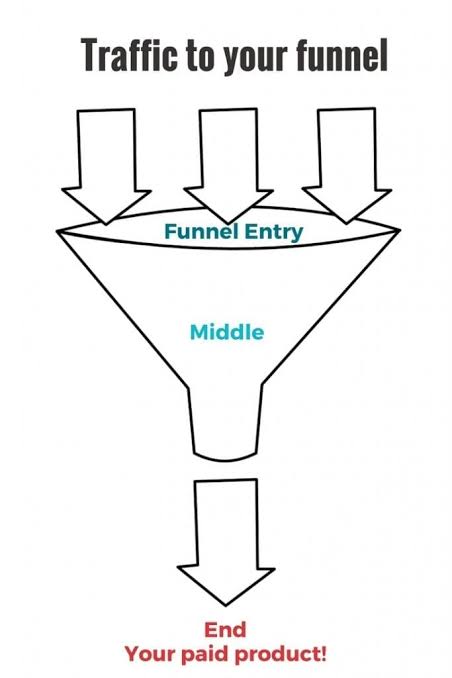
A sales funnel is a path from discovering an offer to understanding it and deciding whether to buy. As an affiliate, I guide people toward another company’s product and may earn a commission when they purchase.
The familiar three stages are:
- Top of the funnel: attention. A blog, video, or social post introduces a relevant problem or possibility.
- Middle of the funnel: understanding. A useful resource or follow-up helps people assess the product, costs, and suitability. If collecting email addresses, explain what subscribers will receive.
- Bottom of the funnel: a decision. People who see a fit get a clear next step toward the seller’s offer or checkout.
These stages should help the reader make an informed decision. Moving a confusing offer farther down a funnel does not make it clearer.
That is what I look for in a funnel-building tool: a way to present useful information in a sensible order. Home Business Academy, or HBA, offers funnel-building tools and training, and it is one of the services I recommend considering. HBA offers funnel building tools and comprehensive online business training. Click on https://thehba.app/go?aff_id=18946 now to get your funnel up and running and take advantage of their bonus Financial Literacy Program, packed with tons of information to help you at whatever stage of your journey you’re at.
9. Copywriting That Turns Interest Into Sales Keeps the Landing Page Consistent

Your landing page is part of that funnel. It is where a reader arrives after clicking—and where your opening promise needs to hold together.
If the post promises beginner instruction, explain the starting skills required. If the offer involves recurring costs, make them visible. If you are sending someone to a seller’s presentation, tell them what to expect there.
A clean, professional page helps readers find the information. They need to know what they receive, who supplies it, what it costs, and what happens when they click. Attractive design cannot answer those questions on its own.
You do not need a fancy engineer to begin. You do need a system you can understand and maintain. Choose your website and landing-page tools around that practical need.
10. Copywriting That Turns Interest Into Sales Has to Earn the Recommendation

Hicks got my attention. I bought the books. Decades later, I still remember the promises. That tells you something about the power of his writing.
I also remember waiting for instructions I could use. That tells you something about the responsibility that comes after the sale.
For affiliate marketers, the lesson is personal. I may not control the product or the seller’s presentation, but I control what I say before someone follows my link. I can describe my experience, explain the fit, acknowledge the limitations, and make the next step clear.
Start with something your reader cares about. Give them a reason to keep reading. Then give them enough substance to make a decision they understand.
You got their attention. Now give them a reason to be glad they stayed.
Thank you for reading. Be well.
Daniel O’Shea