AI Fatigue – Are People Getting Sick of Artificial Marketing?

Table of Contents
AI Fatigue: Are People Sick of Artificial Marketing?
Is artificial intelligence making online marketing more effective—or are we reaching the point where consumers have simply had enough?
Everywhere you look, marketers are rushing to embrace AI. Emails, advertisements, videos, social media posts, sales funnels—you name it, artificial intelligence is involved.
But there’s a growing problem.
Consumers are getting better at recognizing artificial content, and many are getting tired of it.
People of all ages are being bombarded with AI-generated marketing. Some younger consumers are especially quick to recognize the sameness of AI content. Their reaction can be devastatingly simple:
“If the presentation is phony, why should I trust the product?”
Older consumers may approach AI marketing with a different kind of skepticism. Some are uncomfortable with the technology, while others simply prefer dealing with an actual human being.
And perhaps they’re onto something. I’ve written before about the importance of building trust in affiliate marketing, and why authenticity matters more than hype Authentic Affiliate Marketing : Why Trust Sells Better Than Hype
Consider the Japanese tradition of shokuhin sampuru, the remarkably realistic food replicas displayed outside restaurants. They’re handcrafted from materials such as wax, resin, and plastic. You’ll even find them in some Japanese restaurants here in the United States.
In an age when AI can generate a mouthwatering image of practically anything, there’s something refreshing about an actual three-dimensional model of what you’re about to eat.
Sometimes the old-fashioned approach still works.
A Young Entrepreneur Teaches an Old Dog a New Trick
My affiliate sponsor and mentor is Justin Temple, creator of HighTicketLifestyle https://thehighticketlifestyle.com/danielo
Justin is a great guy who has been a tremendous help to me. Although he’s 35 years my junior, I’ve learned an enormous amount from him.
Justin, like myself, subscribes to the “eat what you kill” philosophy of entrepreneurship. Nobody is going to do the work for you. You have to create content, build relationships, and earn your business.
During one of our sessions last week, Justin mentioned that he was drafting his blog content longhand.
Longhand!
I looked at his long hair and thought, “Maybe he’s a Luddite?”
Then I reconsidered.
“Can’t be. I met him online.”
But his comment stuck with me.
What a wonderfully simple way to transfer your thoughts and ideas into something tangible.
Just write them down.
No elaborate prompts. No complicated software. No spending twenty minutes explaining to a machine what you could have written yourself in five.
Sometimes simplicity wins.
Are Our Marketing Tools Helping Us—or Slowing Us Down?
Putting together this blog reminded me of the delicate balance between simplicity and technology that all of us face in content creation.
I regularly ask myself:
Are these tools helping me communicate my message and convert visitors into customers, or are they becoming unwieldy and weighing me down?
Most of my readers have been around long enough to encounter those ridiculously complicated, overly engineered sales funnels.
You know the ones.
The creators may understand how everything works, but the rest of us—including a few NASA aerospace engineers—are left scratching our heads.
That’s one reason I prefer straightforward platforms and systems, including Home Business Academy https://thehba.app/go?aff_id=18946 that allow me to concentrate on the actual business rather than endlessly tinkering with technology.
The Famous 55/38/7 Rule—and What It Really Means
Many sales coaches reference the 55/38/7 rule, based on research conducted by UCLA psychologist Dr. Albert Mehrabian during the 1960s.
The familiar breakdown is:
- 55% — Body language: Facial expressions, gestures, and posture.
- 38% — Tone of voice: Vocal inflection, pitch, and delivery.
- 7% — Spoken words: The actual words being communicated.
There’s an important distinction here.
Mehrabian’s research concerned how people interpret feelings and attitudes when verbal and nonverbal messages conflict. It was never intended to suggest that words account for only 7% of all communication.
Nevertheless, the underlying lesson is worth remembering.
How we communicate can be just as important as what we communicate.
A real person can convey hesitation, sincerity, humor, and emotion in ways that aren’t always convincing when artificially generated.
And in sales, trust matters.
The Conversion Disconnect: Is AI Hurting Sales?
AI automation can save time, reduce repetitive work, and help marketers reach larger audiences.
But there’s a potential downside.
If consumers perceive the marketing as artificial, misleading, or impersonal, the efficiency gains may come at the expense of trust.
Some marketing research has reported differences between human-created and AI-generated advertisements. Neil Patel has discussed this issue, including comparisons of conversion performance.
Other consumer surveys have explored whether buyers trust AI-generated recommendations, whether they prefer human reviews, and how frequently they encounter misleading AI content.
[EDITOR’S NOTE: Insert the verified Neil Patel conversion figures and original consumer survey statistics here before publishing. The percentages in the original draft need source confirmation.]
Whatever the exact percentages, the question for affiliate marketers remains the same:
What’s the point of producing ten times more content if people trust it ten times less?
More content doesn’t automatically mean more customers.
And more automation doesn’t automatically mean more sales.
Generational Differences: Not Everyone Sees AI the Same Way
Different generations have different relationships with artificial intelligence, although no generation is completely united in its opinion.
Generation Z
Younger consumers have grown up surrounded by digital technology. Many are comfortable experimenting with AI tools, avatars, and synthetic media.
But they’re also increasingly familiar with what AI-generated content looks and sounds like.
That familiarity can make generic, repetitive content particularly easy to dismiss.
Millennials
Millennials frequently use digital tools in their professional and personal lives.
Many recognize the practical advantages of AI while still placing considerable value on authenticity, personal recommendations, and genuine experiences.
Generation X and Baby Boomers
Older consumers may be more cautious about AI-generated claims, particularly when money, financial opportunities, or unfamiliar products are involved.
For marketers targeting these audiences, personal credibility, clear explanations, and transparency can be especially important.
Of course, these are broad tendencies—not rules that apply to everyone.
A 25-year-old can reject artificial marketing just as enthusiastically as a 75-year-old.
And a 75-year-old can become an enthusiastic AI user.
I happen to know one.
AI Fatigue: Why the Human Touch Still MattersWhy the Human Touch Still Matters
There are certain qualities that remain particularly valuable in sales and relationship building.
1. Empathy and emotional understanding
A good salesperson recognizes hesitation, listens carefully, and responds to what the customer is actually saying.
AI can simulate empathy, but that isn’t the same thing as personally understanding someone’s experience.
2. Personal relationships and trust
People are more comfortable doing business with someone they believe is accountable for what they’re recommending.
That is especially true in affiliate marketing.
If I recommend a product or service, I want to know what I’m recommending and why.
3. Humor, spontaneity, and personality
Some of the best conversations aren’t scripted.
A little humor, an unexpected observation, or an honest admission can establish a connection that no perfectly polished sales pitch can guarantee.
And that’s something I believe marketers should be careful not to lose.
My Four-Hour AI Nightmare
AI is an excellent tool for affiliate and digital marketers when used strategically.
But too much reliance on it can actually waste more time than you think you’re saving.
Here’s a perfect example.
About a month ago, I was attempting to connect the hundred or so platforms we apparently all need to operate an online business.
Email accounts. Facebook. Instagram. Automation platforms. Marketing tools.
You know the drill.
I spent approximately four hours working with AI, trying to get everything connected properly.
And eventually, it worked!
Well, sort of.
The connections had been successfully made—to my alternate accounts.
Wrong email. Wrong Facebook. Wrong Instagram.
I had successfully automated my way into a mess that required closing some accounts just to simplify things.
During this four-hour exercise in exasperation, I experienced a light-bulb moment.
Admittedly, it may have been a rather dim bulb.
“Just do it yourself.”
So I excused myself from AI—dating myself with that expression—and manually connected everything.
Thirty minutes later, I was finished.
Four hours with artificial intelligence.
Thirty minutes with natural intelligence.
There’s a lesson in there somewhere.
AI Is Still an Amazing Tool
Now, don’t misunderstand me.
I’m not suggesting we abandon artificial intelligence and return to typewriters, rotary phones, and carbon paper.
AI can be extraordinarily useful.
Tracking metrics, organizing information, managing emails, researching topics, and automating repetitive tasks can make running an online business considerably easier.
For example, email marketing platforms such as AWeber https://www.aweber.com/easy-email.htm?id=562049 offer automation tools that help marketers communicate with subscribers without manually sending every message.
AWeber also offers a free plan, subject to its current terms, allowing beginners to explore the platform before committing to a paid subscription.
That’s the kind of automation I appreciate.
Technology doing the repetitive work while I concentrate on communicating with people.
And let’s face it.
AI is FUN!
You can experiment with ideas, create entertaining videos, research subjects that interest you, and bring something you’ve been imagining to life.
It can help with content creation, campaign analysis, and all sorts of tedious administrative tasks.
And you can still goof off making ridiculous skit videos.
What’s not to like?
The problem isn’t AI itself.
The problem begins when we allow the technology to replace our judgment instead of supporting it.
The Road of Excess Leads to the Palace of Wisdom
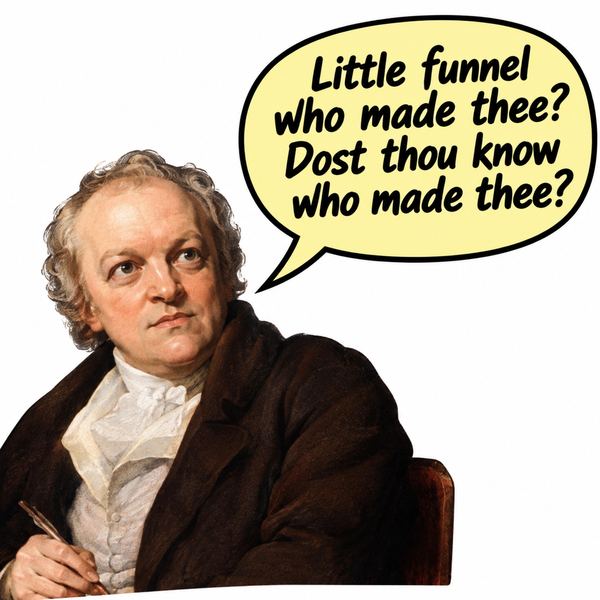
The poet William Blake famously wrote:
“The road of excess leads to the palace of wisdom.”
He certainly wasn’t thinking about affiliate marketing or artificial intelligence when he wrote those words.
But I think they’re particularly appropriate today.
We’re experimenting with extraordinary technology. We’re discovering what works, what doesn’t, and what may have been better left alone.
Perhaps the excessive enthusiasm surrounding AI is exactly what will eventually teach us how to use it wisely.
The goal shouldn’t be to eliminate the human element from marketing.
It should be to use technology to make the human element more effective.
And speaking of William Blake, perhaps he would have enjoyed greater financial success during his lifetime if he’d had access to something like Badass Network https://badassnetwork.com/go/dino4051/
Badass Network gives me the opportunity to publish my blog, share my experiences, and connect with a community of like-minded entrepreneurs and writers.
No printing press required.
Final Thoughts: Know When NOT to Use AI
Artificial intelligence isn’t going away, nor should it.
It has become an extraordinarily valuable resource for anyone building an online business.
But there’s a difference between using AI intelligently and allowing it to dominate every aspect of your marketing.
I believe we’re approaching a point where authenticity itself may become an increasingly valuable competitive advantage.
Not because AI is inherently bad.
But because people still want to connect with people.
And perhaps the smartest way to use artificial intelligence is simply knowing when not to use it.
I’d love to hear your thoughts.
As an affiliate or digital marketer, which is the bigger challenge for you: converting visitors into customers or dealing with the daily tedium of running your business?
And as a consumer, can you recognize AI-generated marketing when you see it?
More importantly, does it affect whether you trust the person selling the product?
Let me know in the comments.