Affiliate Marketing Trust: Why Customers Don’t Believe You (And How to Fix It)

Table of Contents

Here’s something strange about human nature.
A person will take financial advice from a complete stranger on YouTube, believe a restaurant review written by someone they’ve never met, and purchase a $200 gadget because 37 strangers gave it five stars.
But the minute an affiliate marketer recommends a $27 product?
Suddenly, everybody becomes Sherlock Holmes.
Out comes the magnifying glass.
“What’s the catch?”
“Where are the hidden charges?”
“Why is this guy so anxious to sell me something?”
And my personal favorite:
“If this program is so wonderful, why are you selling it instead of using it yourself?”
Fair questions, every one of them.
Because somewhere along the way, online marketers taught consumers to distrust them.
And now legitimate affiliate marketers are paying the price.
1. The Affiliate Marketing Trust Crisis: How We Got Here

Affiliate marketing is a multibillion-dollar industry built around a perfectly legitimate business model.
A business pays an independent promoter a commission for generating a sale or another qualifying action.
Simple enough.
Unfortunately, somewhere between recommending useful products and promising financial independence by next Thursday, a portion of the industry lost its way.
Enter the Lamborghini Lifestyle.
Luxury cars. Private jets. Rolex watches. Exotic vacations.
And, naturally, the obligatory photograph of somebody sitting beside a swimming pool, supposedly earning $10,000 while sipping a margarita.
The implication?
You can have all this, too. Just purchase my program.
Never mind that the individual promoting the opportunity might have spent years building a business—or that the photograph could be staged, rented, or entirely fabricated.
An exceptional result was being presented as an ordinary expectation.
Then came the manufactured testimonials, altered earnings dashboards, purchased endorsements, and organized groups exchanging artificial engagement.
And perhaps most troubling, certain business opportunities began placing more emphasis on recruiting new buyers to resell the same training than on providing products or services with independent value.
The basic cornerstone of trust in sales is to do what you say and say what you do. There were times in my life where I wanted to follow up on a lead but I threw away that napking with the leads information written on it. That
no longer happens. No mistakenly deleted people who’ve expressed interest. I know rely on AWeber to collect my lead information and to respond to those leads promptly and professionally.
Click right now – www.aweber.com/easy-email.htm?id=562049 to make sure your leads are safe and have their inquiries answered.
Not every high-ticket affiliate program operates this way. But when a program’s primary selling point is the opportunity to sell that very same program, consumers have good reason to examine what they’re actually purchasing.
The damage to affiliate marketing trust was inevitable.
2. The Aftershock: Why Affiliate Marketing Trust Is So Difficult to Restore
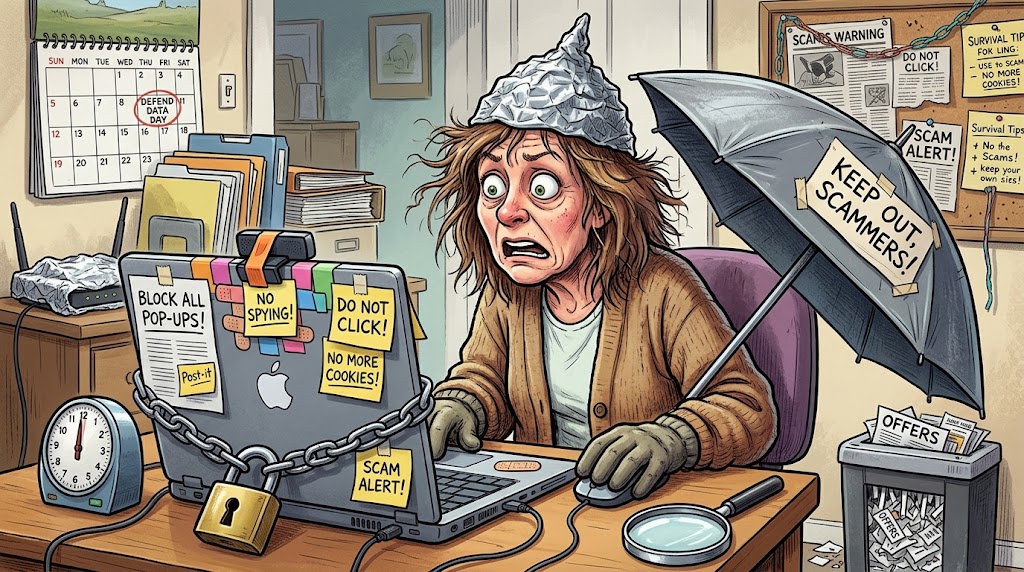
The result is a consumer who approaches online offers with extraordinary skepticism.
And who can blame them?
Consider what happened in 2024.
Amazon reported proactively blocking more than 275 million suspected fake reviews.
Google reported blocking or removing more than 240 million reviews that violated its policies on Google Maps.
Think about those numbers.
Hundreds of millions of questionable or policy-violating reviews were intercepted or removed by just two major platforms.
These statistics don’t mean every rejected review was fraudulent. They do, however, illustrate the enormous scale of the problem online platforms face when protecting consumer trust.
Even the Federal Trade Commission has stepped up its efforts to combat deceptive endorsements and fabricated testimonials.
The FTC’s rules prohibit various forms of fake consumer reviews and testimonials, while its endorsement guidance emphasizes clear disclosure of material relationships between promoters and the companies they recommend.
Transparency is no longer an optional marketing advantage. It’s an essential part of doing business.
And here’s an interesting consequence.
Even inexpensive products now trigger suspicion.
That innocent-looking $27 offer?
A prospective customer may wonder whether it’s merely the first installment in a never-ending parade of upsells.
Will there be another $97 upgrade?
A $497 premium package?
A monthly subscription?
Or perhaps an avalanche of unsolicited emails?
The price isn’t necessarily the problem.
The uncertainty is.
3. The $27 Suspicion: When Cheap Offers Look Expensive

Years ago, a low introductory price was often enough to overcome buyer resistance.
Today, it can have the opposite effect.
Consumers have learned that a small initial payment doesn’t always reveal the full financial commitment.
A $27 product might be an excellent bargain.
Or it might be the entrance to an expensive sales funnel.
The responsible affiliate marketer explains the difference.
What does the initial purchase include?
Are additional purchases optional?
Does the customer need separate software, hosting, advertising, or training?
Are there recurring fees?
And perhaps most importantly:
Can the buyer receive meaningful value without purchasing anything else?
An honest answer to these questions can accomplish more than a dozen enthusiastic testimonials.
A customer who understands the offer is in a better position to make a confident decision.
4. The Fake Authenticity Epidemic in Affiliate Marketing

Here’s another peculiar development.
Everybody is authentic now.
Everybody is transparent.
Everybody is passionate about helping people.
Everybody wants to share their incredible journey.
And everybody seems to have discovered the same life-changing secret last Tuesday.
When authenticity becomes a marketing script, it stops being particularly authentic.
The answer isn’t to abandon personal storytelling.
A little self-revelation can help establish a genuine connection.
But as we explored in my previous article, Customer-Centered Marketing: When Storytelling Goes Too Far, there’s a point where personal storytelling stops serving the customer.
A prospect doesn’t necessarily need your autobiography.
They need to know whether you understand their problem.
Authenticity isn’t how much you reveal about yourself. It’s how accurately you represent what you’re offering.
And sometimes, the most convincing thing you can say is something your prospect wasn’t expecting.
5. The Law of Candor: Why Admitting a Negative Can Build Trust

One of my favorite marketing principles comes from Al Ries and Jack Trout’s book The 22 Immutable Laws of Marketing.
They call it The Law of Candor.
The underlying principle is wonderfully simple.
Admitting a legitimate weakness can make your positive claims more believable.
Consider some classic advertising campaigns.
Avis famously acknowledged being number two in the rental car business and built a campaign around trying harder.
Listerine confronted complaints about its unpleasant taste rather than pretending everybody loved it.
Volkswagen turned the Beetle’s unconventional appearance into part of its appeal.
These campaigns succeeded in part because they challenged what consumers expected from advertising.
Instead of pretending every product was perfect, they acknowledged something recognizable.
Affiliate marketers can apply the same principle.
Imagine reviewing a training program.
One marketer announces:
“This is absolutely the greatest opportunity available! Anybody can succeed!”
Another says:
“The training is comprehensive, but beginners should understand that building traffic takes time, and some of the recommended tools involve additional expenses.”
Which statement sounds more credible?
The second one.
Not because it’s negative.
Because it gives the reader useful information.
Honesty is disarming precisely because consumers aren’t always expecting it.
Of course, candor isn’t an invitation to bury prospects under your personal problems or deliver a fifteen-minute confession.
Acknowledge the limitation.
Explain its significance.
Then help the customer decide whether the product still makes sense.
That’s the difference between productive honesty and oversharing.
6. Good Affiliate vs. Bad Affiliate: The Difference Is Value
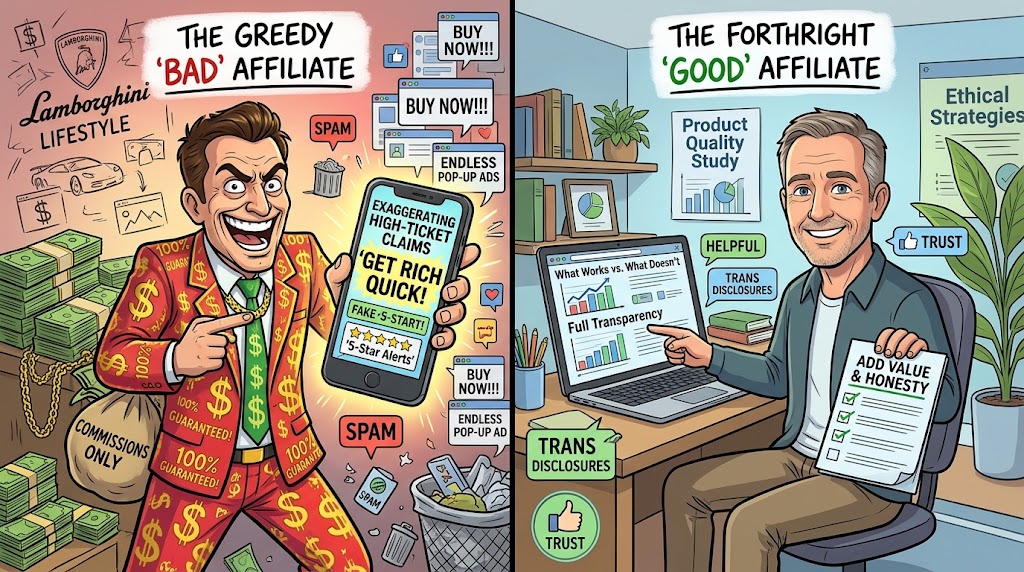
Let’s make this uncomplicated.
Good affiliates recommend solutions. Bad affiliates chase commissions.
A good affiliate considers whether the product genuinely addresses the customer’s needs.
A bad affiliate considers how much money the sale will generate.
Good affiliates tell the truth. Bad affiliates exaggerate.
A good affiliate explains what success requires, including the time, expense, and effort involved.
A bad affiliate presents exceptional outcomes as ordinary results.
Good affiliates balance commissions with customer value.
There’s nothing wrong with earning a substantial commission.
But the size of the commission shouldn’t determine whether a product deserves your recommendation.
Good affiliates follow up. Bad affiliates bombard.
A thoughtful follow-up might answer a question, provide additional information, or help someone compare alternatives.
Spamming, by contrast, involves flooding people with unsolicited promotional messages simply to get an affiliate link in front of more eyes.
Good affiliates help customers make decisions. Bad affiliates manufacture enthusiasm.
A useful product review discusses advantages, limitations, pricing, and suitability.
A questionable review simply announces that everything is wonderful.
Which brings us to another uncomfortable subject.
7. The Five-Star Review Nobody Believes
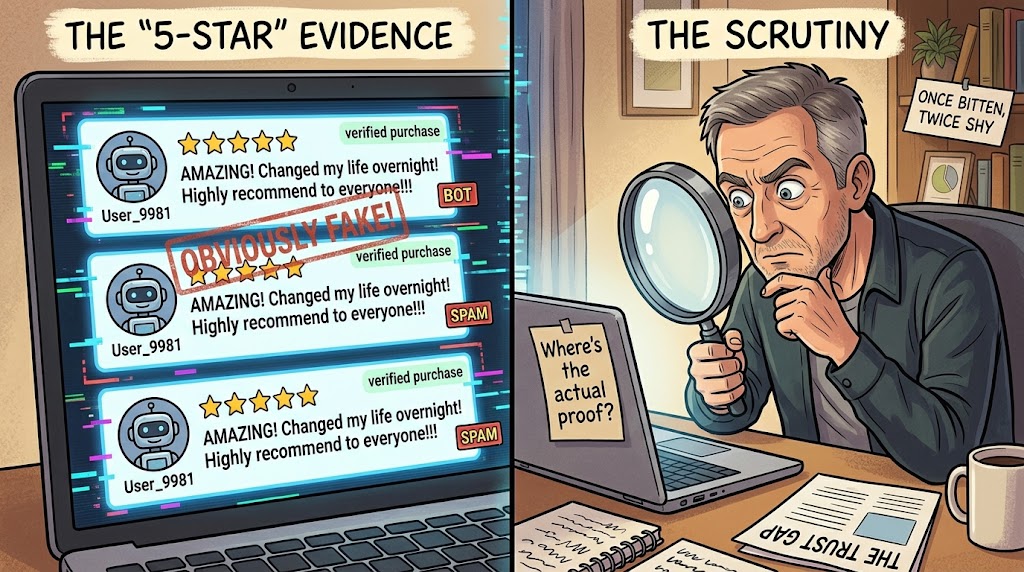
When did a five-star rating become suspicious?
Probably somewhere around the time every product on the internet became AMAZING, INCREDIBLE, and LIFE-CHANGING.
The problem isn’t positive reviews.
Excellent products deserve excellent reviews.
The problem arises when reviews contain nothing but praise and provide little meaningful information.
A trustworthy affiliate review should answer several questions.
What does the product actually do?
What does it cost?
What additional expenses might arise?
Who is it designed for?
What are its limitations?
And who probably shouldn’t purchase it?
There’s another important distinction.
Researching a product is not the same as personally testing it.
You can provide a valuable research-based review without purchasing every program you investigate.
But readers should know whether your conclusions come from personal experience, published documentation, independent research, or a combination of those sources.
Don’t claim to have tested something you haven’t.
Your credibility depends on that distinction.
8. How to Build Affiliate Marketing Trust Without Giving Up Commissions

Let’s clear up a common misconception.
Ethical affiliate marketing doesn’t mean working for free.
It means earning money by helping people make informed purchasing decisions.
Here are five practical ways to accomplish that.
Choose Products Worth Recommending
Start with products, programs, or services that offer genuine value.
Whenever practical, try them yourself.
When personal testing isn’t possible, investigate the product thoroughly and explain the limits of your research.
Explain the Complete Financial Picture
Tell readers about required purchases, recurring subscriptions, and meaningful additional expenses.
An inexpensive introductory offer can still be worthwhile.
But customers should understand what they’re getting into.
Publish Useful Educational Content
Blogs, tutorials, and videos give affiliate marketers opportunities to demonstrate knowledge before asking for a sale.
A reader who learns something useful from your content has a reason to return.
Build Relationships Instead of Mailing Lists Full of Strangers
An email address represents a person.
That person has questions, concerns, responsibilities, and limited time.
Treat the relationship accordingly.
Recommend Tools That Support the Customer’s Goals
For example, someone starting an online business may need a website, a way to communicate with subscribers, and a straightforward method for presenting offers.
That doesn’t mean everybody needs the most expensive collection of software available.
The right tools depend on the business being built.
For readers interested in learning how an affiliate marketing business can be organized, High Ticket Lifestyle is one program they can investigate.
High Ticket Lifestyle is the program I recommend over any otner. Justin is a straight shooter, he knows the business and will help you navigate the rough
terrain of Affiliate/Digital Marketing. Click https://thehighticketlifestyle.com/danielo to benefit from the multiple streams of income the program offers
and the hands on guidance.
9. Affiliate Marketing Trust: Why the Customer Must Come First

I’ve been interested in marketing since I was 14 years old.
Back then, I was fascinated by mail-order advertising and the personalities who understood how to persuade people through the written word.
I watched the industry evolve through newspaper advertisements, direct mail, telephone sales, websites, email marketing, and now automated digital funnels.
The technology has changed enormously.
Human nature?
Not nearly as much.
The old-fashioned salesman knocking on your door and today’s affiliate marketer appearing in your Instagram feed face the same fundamental challenge.
Can I trust the person trying to sell me something?
As we grow in Affiliate/Digital Marketing, we rely on tools to keep us competitive. I needed a sales funnel and landing page, I chose Home Business Academy
because of the simplicity they promised me, they also are helping me create a landing page to capture leads and to convey my offer clearly and creatively.
They also offer an extensive collection of indispensible educational tools. Go now to –https://thehba.app/go?aff_id=18946 Don’t delay. Your competition isn’t.
Consumers aren’t necessarily opposed to buying.
They’re opposed to being misled.
They don’t object to someone earning a commission.
They object to discovering important information after they’ve already paid.
And they don’t demand perfection.
They want enough accurate information to decide whether a purchase makes sense.
10. The Future of Affiliate Marketing Trust: Becoming Worth Believing

As I begin reviewing more affiliate marketing programs and digital business opportunities, I’m going to approach them with a few straightforward questions.
What does the customer receive?
What does it really cost?
What are the advantages?
What are the limitations?
And most importantly:
Would I feel comfortable explaining this purchase to someone I care about?
Some programs will measure up better than others.
That’s the nature of reviews.
But readers deserve information that helps them make decisions, not another sales presentation disguised as independent research.
Affiliate marketing remains a legitimate way to earn income, and its basic model can benefit businesses, creators, and customers alike.
Businesses gain exposure.
Content creators can receive compensation for useful recommendations.
Customers discover products that might solve their problems.
Everybody has an opportunity to benefit.
But that relationship only works when credibility comes before the commission.
Because at the end of the day:
The most valuable thing an affiliate marketer can earn isn’t a commission.
It’s the right to be believed the next time.
Affiliate Disclosure
This article contains affiliate links. If you purchase through certain links, I may earn a commission at no additional cost to you. My recommendations and opinions are my own. No earnings or business results are guaranteed.
DestinyMethod4u — No hype. Just the life I enjoy.