Affiliate Traffic: Why Blogging Beats Every Other Source
Look, affiliate traffic is one of those things people chase in completely the wrong direction. They see someone post a TikTok that blows up, or they hear about Facebook ads printing money, and they think that’s the play. It’s not. Not if you want something that lasts.
We’ve been building traffic since ’99. Some methods worked brilliantly for a year, then died. Others looked slow and boring at first but kept compounding for a decade. Affiliate traffic from blogging falls squarely in that second category, and we’re going to explain why.
Table of Contents
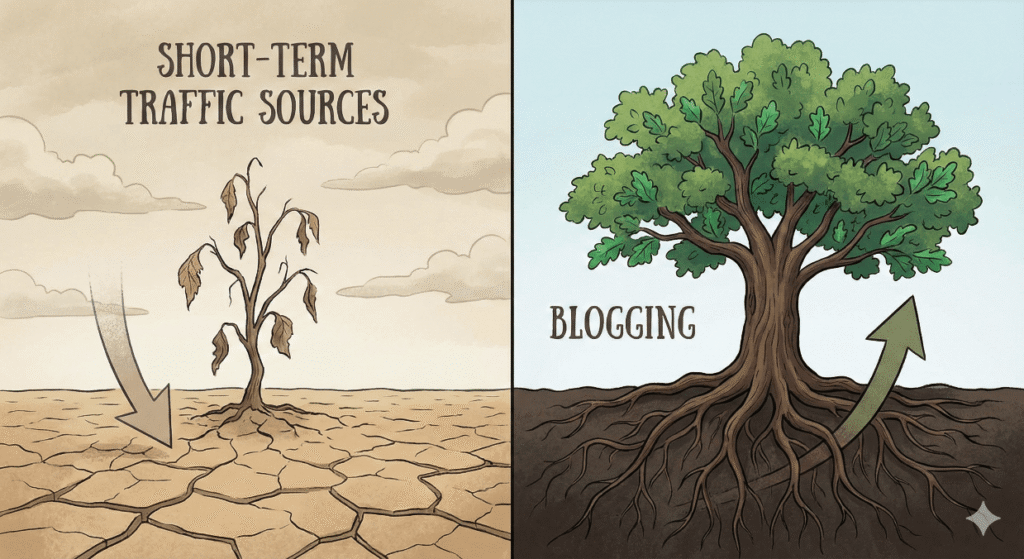
Most Affiliate Traffic Sources Have an Expiration Date
Paid ads are seductive. You put money in, you get clicks out. The math seems simple until it isn’t. We ran Facebook ads for affiliate offers back in 2018. Worked great for about six months. Then costs went up, competition increased, and the margins evaporated. Same story with Google Ads. The moment you stop spending, your traffic stops.
Social media is worse. You’re building on rented land, and the landlord changes the rules constantly. We watched people with 50k Instagram followers suddenly get zero reach because the algorithm shifted. TikTok? Same game, different app. You’re one policy change away from starting over.
Blogging is different. A post we wrote in 2021 about a niche topic still brings in affiliate traffic every single month. No ad spend. No algorithm worship. It just sits there, doing its job, because Google rewards content that genuinely helps people. That’s not hype. That’s been our experience across multiple projects and niches over two decades.
The Compound Effect Nobody Talks About
When we say blogging is scalable, we mean something specific. Every blog post you publish has the potential to rank and drive affiliate traffic for years. But it goes further than that.
Fifty posts don’t just bring fifty times the traffic of one post. They bring more than that because Google starts to see your site as an authority. Your newer posts rank faster. Your older posts get a lift from fresh content. The whole thing feeds itself.
We published roughly 80 posts on one site over two years. By year three, we weren’t writing as much (maybe one post a month), but traffic kept climbing. That’s the compound effect. You put in the work upfront, and it keeps paying.
Compare that to posting on social media, where yesterday’s content is already forgotten. Or paid ads, where last week’s budget bought you exactly nothing for today.
Blogging Gives You Control Over Your Affiliate Traffic
This matters more than people realise. When you rely on someone else’s platform for traffic, you’re one terms-of-service update away from disaster. We’ve seen affiliate accounts get banned from platforms for reasons that were never properly explained. All that audience, all that work, gone.
Your blog is yours. Even if you host it somewhere (which, honestly, most people should), the content belongs to you. The links are yours. The relationship with your audience is direct. If something changes, you adapt. You don’t wake up locked out of your own business.
And when it comes to affiliate traffic specifically, blogging lets you target people who are actually searching for solutions. Someone Googling “best budget laptop for students” is way more likely to click your affiliate link than someone scrolling past your TikTok. That intent makes all the difference for conversions.
Why People Think Blogging Doesn’t Work
Usually because they quit too early. We get it. You write ten posts, check your analytics, see twelve visitors, and wonder what the point is. The thing is (and this might sound discouraging before it sounds encouraging) blogging takes time to build momentum. Three months. Six months. Sometimes a year before you see real traction.
But once it clicks, it really clicks. A member in the Badass Network published consistently for about eight months before any of their posts ranked. Then three posts hit page one in the same month. Their affiliate traffic went from basically nothing to several hundred visitors a day. They didn’t do anything magical. They just didn’t stop.
The other reason people struggle is they’re starting from zero domain authority. Google doesn’t trust new sites immediately. You have to prove yourself, and that takes time when you’re building alone. This is actually one of the main reasons we built Badass Network the way we did. New blogs on the network benefit from the domain authority the whole community has built. Posts rank faster because Google already trusts the domain.
Affiliate Traffic That Scales Without Burning You Out
Social media demands constant presence. Miss a day, miss a week, and your reach tanks. We’ve talked to creators who feel chained to their phones because the algorithm punishes inconsistency. That’s not a business model. That’s a hamster wheel.
Blogging works differently. Sure, you need to publish regularly when you’re building. But once you’ve got a library of content working for you, you can step back. We’ve taken month-long breaks from writing without seeing affiliate traffic drop. The content keeps bringing people in while we do other things.
That’s what scalable actually means. Not just “can handle more traffic” but “doesn’t require proportionally more effort as it grows.” You can’t outsource your TikTok personality. You can absolutely outsource or systematise blog content once you know what works.
The Strategy That Actually Works for Affiliate Traffic
We’re not saying blogging is easy. What we’re saying is it’s worth it. And there’s a difference.
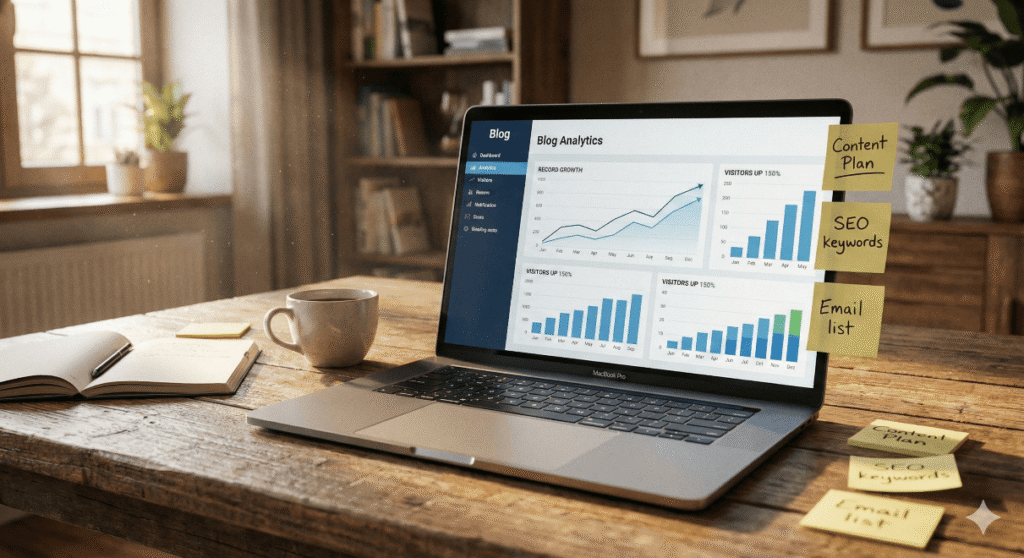
Find topics where people are searching with buying intent. Write genuinely useful content that helps them make a decision. Include your affiliate links naturally, not stuffed in everywhere like spam. Do that consistently, and the traffic comes.
One thing we’ve learned: long-form content outperforms thin posts almost every time. We’re talking 1,500 to 3,000 words when the topic warrants it. Not fluff, but genuine depth. Google rewards thoroughness when it actually answers the searcher’s question.
Internal linking helps too. Connect your posts so readers (and search engines) can find related content. A post about budget laptops links to your post about laptop accessories. Everything reinforces everything else.
And honestly? The technical stuff matters less than people think. We’ve ranked posts on sites with terrible page speed because the content was exactly what people needed. Don’t let “I need to fix my site first” become an excuse to never start writing.
Start Building Affiliate Traffic That Lasts
If you want traffic that compounds instead of disappearing, blogging is still the answer. It’s not the flashiest strategy. Nobody’s making viral videos about patiently publishing blog posts for a year. But it works. We’ve been doing this long enough to have watched every “new hot traffic source” come and go while blogs kept chugging along.
Moz’s guide to SEO is worth reading if you want to understand the fundamentals. Get that foundation right, then write content people actually want to read.
If you’d rather skip the part where you build domain authority from scratch, that’s exactly what Badass Network is for. You get a hosted blog on a domain that already has traction, plus a community of people doing the same thing. It’s what we wished existed when we were starting out.
Either way, stop chasing traffic that vanishes when you stop paying for it. Build something that sticks around.